Project requests, approvals, and milestone billing for structural biology cores
Take protein, crystallization, X-ray, and biophysics requests with the approvals you set, book instruments with training checks, share files with versions, bill by the hour, per sample, or at milestones, and report across facilities.
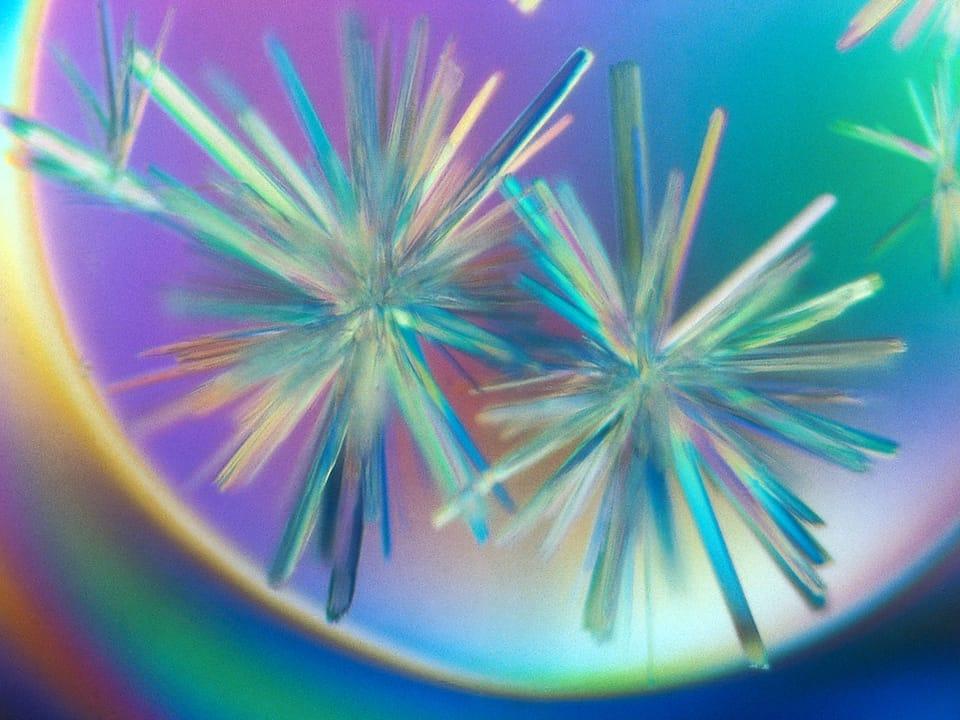
Set up as a structural biology core
Setup adds 21 instruments, 8 services, and 37 maintenance plans.
Follow a request through the core
Pick a service, send the request, and take it through to the invoice.
Services
Protein expression and purification
Your construct expressed in bacteria, insect cells, or mammalian cells and purified by affinity and size exclusion chromatography. You get the purified protein with its yield, a gel showing its purity, and the size exclusion trace.
Paste rows from a spreadsheet, or add them one at a time.
Estimated charge $1,080.00
$45.00 per sample × 24 samples.
This brings Aging cohort to $9,080.00 of its $10,000.00 budget.
Who it is for
Structural biology cores
A structural biology core runs long projects across several kinds of work. A structure can start as a gene and pass through expression, purification, crystallization, data collection, and model building over months, often in more than one facility. ConductCommons keeps each project with its approvals, stages, files, QC, and milestones, and puts the instruments behind it on one schedule.
What comes set up for a structural biology core
21instruments
8services
37maintenance plans
See every instrument, service, and plan
Instruments21
X-ray diffractometer
Crystallization robot
Crystal imaging system (2)
Stereo microscope
FPLC system (2)
Shaking incubator (2)
High-pressure cell disruptor
SEC-MALS system
Dynamic light scattering instrument (DLS)
Circular dichroism spectrometer (CD)
Differential scanning fluorimeter (nanoDSF)
Surface plasmon resonance system (SPR)
Bio-layer interferometry system (BLI)
Isothermal titration calorimeter (ITC)
Cold room
Data processing workstation (2)
GPU compute server
Services8
Protein expression and purification
per sample, about 28 days, 6 stages
Crystallization screening
per sample, about 14 days, 4 stages
X-ray data collection
per sample, about 14 days, 5 stages
Structure determination project
per request, 6 stages
Biophysical characterization
per sample, about 7 days, 4 stages
Binding analysis
per sample, about 14 days, 5 stages
Assisted instrument session
by the hour
Structural biology consultation
by the hour
Maintenance plans37
Check the X-ray source and record the beam intensity
every week, on 1 instrument
Check the cryostream and the chiller water
every month, on 1 instrument
Test the shutters and safety interlocks
every 3 months, on 1 instrument
Radiation safety survey
every year, on 1 instrument
Flush the wash station and check the drops
every week, on 1 instrument
Calibrate the drop volume
every 3 months, on 1 instrument
Check the temperature and the image focus
every month, on 2 instruments
Clean the system and store it in 20% ethanol
every week, on 2 instruments
Test the column and check the pump seals
every 3 months, on 2 instruments
Clean the chamber and check the temperature and speed
every month, on 2 instruments
Check the seals and valves
every 3 months, on 1 instrument
Run the BSA standard and normalize the detectors
every month, on 1 instrument
Measure the size standard
every month, on 1 instrument
Check the nitrogen purge and the lamp hours
every month, on 1 instrument
Calibrate with camphorsulfonic acid
every 3 months, on 1 instrument
Clean the cell and run a water titration
every month, on 1 instrument
Run the calibration titration
every 3 months, on 1 instrument
Run desorb and sanitize
every month, on 1 instrument
Run the performance check with a reference sample
every 3 months, on 2 instruments
Check the temperature log and the door seal
every month, on 1 instrument
Install software and security updates
every month, on 3 instruments
Archive raw files and clear space
every month, on 3 instruments
Check GPU drivers and temperatures
every month, on 1 instrument
Preventive maintenance visit
every year, on 5 instruments
You can also download free request forms and maintenance logs for this kind of core.
What the core runs
The instruments behind the work
Choose Structural biology when you set up the core, and these open with their booking rules, along with eight services with their stages and usual QC checks, and the maintenance plans. Change anything later, and add any instrument your core shares. Pick an instrument to see its booking rules and maintenance plans.
Instrument status
Updated 10:42 AM on Oct 13; refreshes every minute.
- 1 in use
- 1 booked
- 1 training
- 1 down
- 17 free
Booking rules
- Training
- Needed before booking
- Approval
- Not needed
- Session
- 1 hour to 1 day
- Charged for
- Reserved time
Preventive maintenance
Managers are emailed before each one is due.
Check the X-ray source and record the beam intensity
every week · next due Oct 19
Check the cryostream and the chiller water
every month · next due Oct 31
Test the shutters and safety interlocks
every 3 months · next due Nov 14
Radiation safety survey
every year · next due Jun 26
Preventive maintenance visit
every year · next due Dec 25
X-ray diffractometer
For screening crystals and collecting full datasets, booked with training for up to a day and billed for the time held, with weekly beam checks, interlock tests every 3 months, and a yearly radiation survey on the calendar
Crystallization
A drop-setting robot, two crystal imagers, and a stereo microscope for harvesting, with drop volume calibration and temperature checks
Protein production
Two FPLC systems, two shaking incubators, a high-pressure cell disruptor, and a cold room, with weekly system cleaning and seal checks
Biophysics
SEC-MALS, dynamic light scattering, circular dichroism, nanoDSF, SPR, BLI, and ITC, each with its standard, calibration, or reference check on the calendar
Data processing
Two workstations and a GPU compute server for data processing, model building, and structure prediction
How it fits structural biology work
From construct to structure
Before the work
Each service sets the questions researchers answer, the samples they list, and the stages of the work.
Protein expression and purification
New request
Expression system
Plasmid
What the protein is for
A project’s approver signs off first. The estimate the researcher accepts is the most the request can bill.
Protein expression and purification
SR-0042 · Aging cohort
Sent
Priya Shah · Oct 6, 9:05 AM
Approved for the project
Mei Chen, PI · Oct 6, 11:20 AM
Approved over budget
Dana Whitfield, manager · Oct 7, 9:40 AM
During the work
Name who runs a session, and reserve instrument time for a request, billed on the request.
X-ray diffractometer
Oct 20, 9:00 AM to 5:00 PM
- Emailed
Run by
Elena Rossi
For request
SR-0042 · Protein expression and purification
Billed
On the request
Staff record checks such as purity, diffraction resolution, or model validation. The researcher sees the results.
QC
SR-0042 · Protein expression and purification
- Pass
Purity by SDS-PAGE
24 of 24 samples
- Pass
Yield
Whole request
- Pass
Size exclusion profile
Whole request
Recorded by Elena Rossi, Oct 15
Share drop images, processing reports, and models up to 4 MB each. A file with the same name becomes its next version.
Files
SR-0042 · Chen Lab
- New
Refined model.pdb
Version 3 · Oct 17
- Shared
Processing report.pdf
Version 2 · Oct 16
- Shared
Crystal drop A4.png
Version 1 · Oct 15
After the work
Bill a deposit first, then when crystals diffract and when the model is refined. Completing the request charges the rest.
Milestones
SR-0042 · Aging cohort
- $2,000.00
Deposit
Billed Oct 6
- $4,500.00
Crystals that diffract
Billed Oct 30
- $6,500.00
Refined model
Charged at completion
Instruments bill by the hour. Sessions, milestones, and completed requests go on one monthly statement.
INV-0014
Chen Lab · Aging cohort
- $540.00
Protein expression and purification
12 samples at $45.00
- $1,080.00
Crystallization screening
24 samples at $45.00
- $270.00
X-ray data collection
6 samples at $45.00
Total (USD)$1,890.00
Run crystallography, biophysics, and protein production as facilities, then compare them side by side.
Hours used by facility
This year
- Crystallography812 hours
- Biophysics704 hours
- Protein production422 hours
On the instruments
Training is checked before booking and at check-in. A facility can limit bookings to labs it has added.
Schedule
Oct 20
X-ray diffractometer
Crystallization robot
Crystal imaging system 1
- Booked
- Training
- Maintenance
Managers are reminded of beam checks, interlock tests, and service visits. Downtime tells the people booked.
Maintenance plans
24 plans
- Due Oct 18
Check the X-ray source and record the beam intensity
every week
- Due Oct 22
Check the cryostream and the chiller water
every month
- Due Nov 8
Test the shutters and safety interlocks
every 3 months
- Due Dec 19
Radiation safety survey
every year
Questions
Structural biology core questions
Can crystallography, biophysics, and cryo-EM run as separate facilities?
Yes. Under Facilities, add a facility for each, with its own instruments, services, managers, and staff. Under Reports, Build a report groups any report by facility. A center that also runs cryo-EM or NMR adds that kind of core later from + Add instruments.
Can we bill a structure project in parts?
Yes. Once the request is approved, open it and, under Milestones, name the milestone, such as Crystals that diffract, enter the amount, and choose Bill milestone. Each goes on the next statement, and together they bill at most the approved amount. Completing the request charges the rest.
Can the PI approve a request before the core starts?
Yes. When the project a request is charged to has an approver, such as the PI, the request waits for their approval, and for a manager’s if it would pass a budget that needs one. The approver is emailed and approves it under Requests, and then the core is emailed.
How do constructs and data move between the lab and the core?
Researchers add files to the request, such as a sequence or plasmid map, up to 4 MB each. The core shares drop images, processing reports, and models the same way, and the researcher gets an email when it does. Larger datasets go as a link under Results.
Who can book the diffractometer?
It opens with training required, so only people you have trained can book it, for up to a day at a time, billed for the time held. Change its rules under Schedule, then Equipment & access.
Other kinds of core

How facilities work: Labs and facilities. How milestones work: Milestones. How files work: Files on a request.
Run your structural biology core in one place.
Every new workspace includes the Core plan for 30 days. After that, booking stays free; rates, invoices, and service requests need the Core plan.